
Youth in Agriculture: An in-depth review on the attraction farming has on youths in the evolution of Nigerian economy Part III
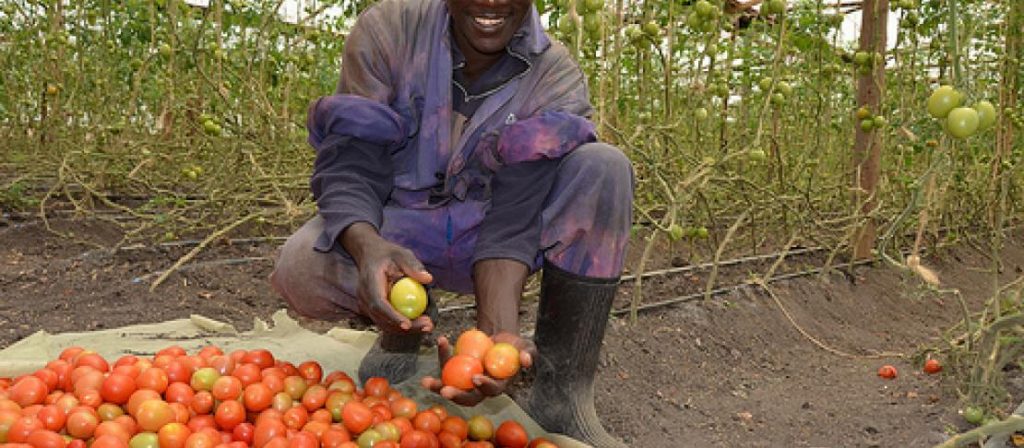
Eight Ways to Engage Youths in Agriculture
Low profitability, poor security of land tenure and high risks are just some of the reasons Nigerians youth do not engage in agriculture. For youths to be involved in agriculture the following should be adopted:
Challenges and Solutions to make Agriculture more Attractive to youths
- Linking social media to agriculture:
The great rise of social media and its attraction among youths with access to the appropriate technologies could be a route into agriculture. The use of mobile phones in Nigeria is fast growing and people are now much more connected to sources of information, and one another. Using this medium to promote agriculture and educate young people could go a long way in engaging youths into agriculture.
- Improve People’s Opinion about Agriculture:
Farming is portrayed as a job/work or profession that is non-profitable, outdated, high risks, tedious and meant for the old. Greater awareness of the benefits of agriculture as a career needs to be made known to youths particularly market engagement and farming as a business. The media, ICT and social media should be used to share information, and experiences between youths and young farmers.
- Adequate Use of Information and Communication Technologies (ICT):
ICT cannot only be used to educate and train those who are not able to attend higher education, it can as well be used as a tool to help youths spread knowledge, information, build networks, create employment opportunities. Such technologies can also reduce cost of production and increases profitability in agriculture.
- Encourage Youth Participation in Policy Making:
For youths to participate in agriculture, the barriers to their engagement need to be addressed such as access to land and loans, non availability of inputs etc., National Policies on Farming and Food Security need to identify and solve these issues facing young people. As such youth need to become part of policy discussion both at local and national levels.
- Ease Access to Land and Loans:
Land is very scarce and difficult to obtain by young people, and without collateral it is impossible to get loans to buy land. Financing for agriculture is needed, e.g. soft loans can be provided for youths who comes up with innovative proposals in agriculture.
- Inclusion of Agriculture on the School Curricula:
Primary and secondary school education should include modules on farming, from growing to marketing of crops. This will help young people to see agriculture as a potential career. Few students choose to study agriculture in tertiary education. Training/teaching materials need to be linked to advance in science and technology, with a focus on agribusiness and entrepreneurship. Reforms to agricultural tertiary education should be designed for young people and as such the process requires their direct participation.
- Public/Private Sectors Investment in Agriculture:
Young people see agriculture as a sector that is neglected by Government, giving farming the image of being old fashioned, tedious ad hard-work. Investment in agriculture is mor effective at reducing poverty than investment in any other sector of the economy, but public/private expenditure on agriculture remains relatively low. Some programmes such as the comprehensive Africa Agriculture Development Programme (CAADP) may go some way in transforming agriculture in Africa but private/public investment are also needed.
- Make Agriculture more Profitable:
Low yields, poor market, poor storage and harvesting facilities etc reduces the potential of agriculture to be profitable, cost of labour farming and production should be reduced while at the same time productivity is increased.

Nevertheless, all of these solutions come with their challenges, access to education, technologies, rural development, land tenure system etc. But as one article states “Africa has the highest number of youth in the whole world, and some of its fertile soils – the two combined could be a force to promote agricultural development.”
Youths organization example young farmers club should be encouraged and strengthened in Nigeria to obtain moral education and material assistance needed for agricultural transformation.
However, the paper recommended that: Youth’s organization example, young farmers clubs, should be encouraged and strengthened in some African states in order to obtain moral education and material assistance needed for agricultural transformation.
Youth should be deeply involved in policy formulation; to this end, the youth should be encouraged to voice their constraints in relation to livelihood and also come together to form cooperatives for the purpose of sourcing loans for establishing farms.
There is no subsidy that agriculture cannot accommodate because every human being whether poor or rich eats food and every citizen is a stakeholder in agriculture. Everybody is a direct beneficiary of any kind of subsidy on agriculture. Therefore, whatever affects agriculture indirectly affects all directly. Agriculture is for all, because it had no class distinction, everybody regardless of social status eats food on a daily basis. It on this premise that this lecture was ‘incubated’ and ‘hatched’ to probe the constraints militating against youths’ participation in agriculture in Nigeria.
CONCLUSION AND RECOMMENDATION
It is obvious that sustainable youth engagement with agriculture will result in positive results not only to food security. It will also have great impacts on unemployment, economic development, rural-urban migration, peace and national security for Nigeria. Nevertheless, to harness these potentials, government and stakeholders must think beyond conceiving youths as units of labour to be placed in jobs.
Effective participation of youths in agriculture requires the ability of the agricultural sector to address youths’ aspirations, expectations, the constraints and desire for social mobility. In view of this, this lecture recommends that: An Empowerment program be institutionalized by an act so that necessary structures will be put in place and sustainability guaranteed. In this regard, community development experts should be involved so that some technical and structural challenges will be handled professionally and relevant desires for the youth attracted.
Transparency and accountability should be ensured through proper supervision, monitoring and evaluation to prevent embezzlement of funds allocated to agricultural projects.
The image of agriculture as dirty, uneducated, unskilled, non professional, labourious work with little returns regarded by other professional and youths must be changed, so that youth can see agriculture as an inspirational career.
National level youth specific strategies need to be initiated to enhance youths access to arable land and other inputs to support professional commercial farming. The success of such efforts will not only create employment opportunities for the youth, but also contribute highly towards changing agricultural production from its subsistence form to professional, agribusiness and mechanized.
Youths organization, such as Young Farmers’ Clubs should be encouraged and strengthened in different states in the country in other to obtain moral education and necessary materials required for agricultural transformations.
Government should focus in making agriculture more attractive and rewarding to the young generation. Agriculture continues to be at the mercy of season and markets. It is imperative for the nation to produce food not only for about 184 million people, but also for animals.
Government should encourage ranching and total abolishing of open grazing farming.
Source: A Webinar delivered by Mr. Anozie Christopher 0n 21st of August 2021 at Hezekiah Oluwasanmi Foundation Monthly Seminar (Part III)
H.A.O original content
 Previous Post
 Next Post